
Table of Contents
- The Hidden Problems Standard Inspections Miss
- How Thermal Imaging Reveals What Your Eyes Cannot
- What Thermal Imaging Detects in Your New Home
- Protecting Your Investment With Advanced Technology
- Our Comprehensive Thermal Imaging Process
- Why Professional Grade Equipment Makes the Difference
- Common Home Issues We Discover Using Thermal Imaging
- Peace of Mind Comes With Thorough Assessment
- Getting Your Same-Day Report With Detailed Findings
- Frequently Asked Questions (FAQ)
The Hidden Problems Standard Inspections Miss
When you’re buying a home, a standard visual inspection catches obvious problems like cracked foundations or damaged roofing. But it misses the hidden issues that cost thousands to repair later. Water seeping inside walls, electrical hotspots, poor insulation, and air leaks remain invisible to the naked eye until they become expensive emergencies.
That’s where thermal imaging technology transforms the inspection process. We’ve completed over 3,700 inspections, and the properties where we deploy infrared thermal imaging consistently reveal problems that a conventional walkthrough would never detect. This advanced tool is no longer a luxury add-on; it’s become essential for buyers who want genuine peace of mind.
A traditional home inspection relies on what an inspector can see and touch. An inspector walks through rooms, opens cabinets, tests outlets, and notes visible damage. This approach works for surface-level issues, but entire categories of problems hide from view.
Moisture accumulation inside walls is the classic example. A pipe might leak silently behind drywall for weeks, creating conditions for mold growth and structural decay. By the time moisture becomes visible on the surface, thousands of dollars in remediation may already be necessary. Similarly, missing or degraded insulation in attics and crawl spaces creates energy efficiency problems that drain your heating and cooling budget month after month, yet remain completely invisible during a standard walkthrough.
Electrical faults present another hidden danger. An overloaded circuit or a failing component generates heat signatures that thermal imaging detects instantly. A standard inspection might identify a tripped breaker, but missing the underlying electrical problem puts your family at risk of fire hazards.
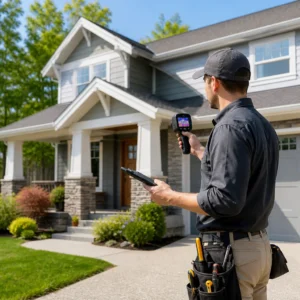
Our approach combines traditional inspection methods with infrared technology to uncover what others miss. This dual perspective gives you the complete picture of your property’s true condition.
How Thermal Imaging Reveals What Your Eyes Cannot
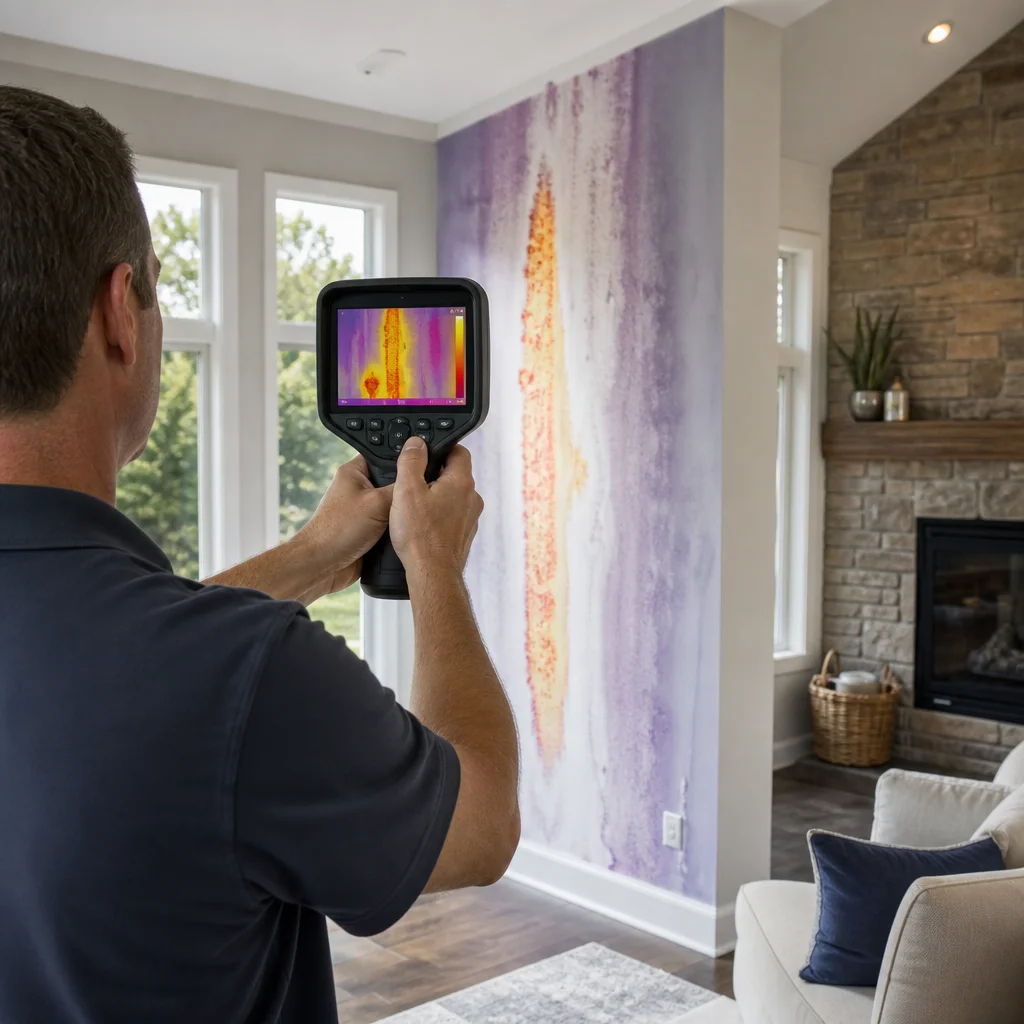
Thermal cameras detect infrared radiation, which translates to temperature variations across surfaces. Different materials and different conditions produce measurable temperature patterns. When we scan your home with thermal imaging, we’re essentially seeing the building’s thermal signature, which tells us precisely where energy is escaping, where moisture is hiding, and where systems are malfunctioning.
Here’s the practical difference: a moisture problem might feel damp to a trained hand, but thermal imaging shows you the exact extent and pattern of that moisture. An insulation gap might be suspected based on energy bills, but thermal imaging pinpoints the exact location and size. Electrical problems that could spark a fire appear as distinct hot spots on the thermal image, allowing us to identify them before they become dangerous.
The technology works in real time. As we move through your home with a thermal camera, we see temperature variations that correspond to structural and mechanical issues. We then photograph these findings, measure them precisely, and document them in your inspection report with visual evidence you can understand.
What Thermal Imaging Detects in Your New Home
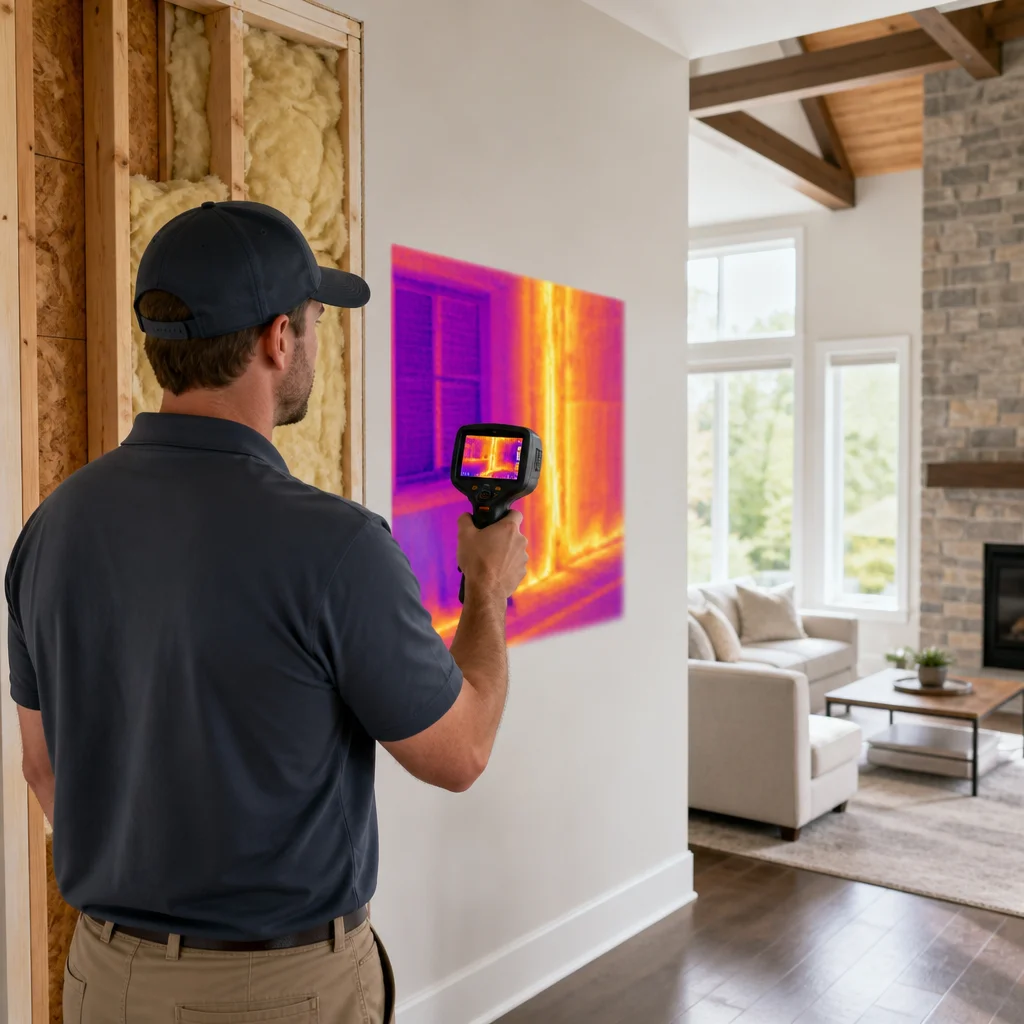
In newer construction, thermal imaging validates that builders completed insulation work properly. We’ve discovered numerous cases where insulation was missing from entire sections of walls or where gaps existed around windows and doors. These oversights create cold spots during winter and hot spots during summer, eventually costing buyers thousands in unnecessary utility bills.
Thermal imaging also confirms that HVAC systems are functioning correctly. When ductwork leaks or isn’t properly sealed, treated air escapes into unconditioned spaces instead of reaching the rooms where you live. Thermal imaging reveals these inefficiencies immediately, giving you leverage to request repairs before closing.
Roof leaks often develop before visible water damage appears inside. We scan roofing from both exterior and interior angles to identify temperature anomalies that indicate water intrusion. Catching these early prevents hidden attic mold and structural rot.
Plumbing and foundation issues leave thermal signatures too. Radiant heating systems that aren’t functioning properly, in-floor heating problems, and foundation cracks with moisture infiltration all produce detectable temperature patterns that standard inspections might miss entirely.
Protecting Your Investment With Advanced Technology
Your home purchase is likely the largest investment of your lifetime. Protecting that investment means knowing the property’s actual condition before you commit your money and your future to it.
When thermal imaging identifies a problem early, you gain negotiating power. You can request repairs, price adjustments, or credits toward remediation. In many cases, these early discoveries prevent far more expensive problems down the road. A small moisture issue caught during inspection might cost a few hundred dollars to address before closing. The same issue discovered six months after purchase could require tens of thousands in water damage repair and mold remediation.
We include free infrared scans as part of our comprehensive inspection process because we believe every buyer deserves this level of certainty. The investment in thermal imaging technology pays for itself the first time it identifies a problem you would have otherwise missed.
Our Comprehensive Thermal Imaging Process
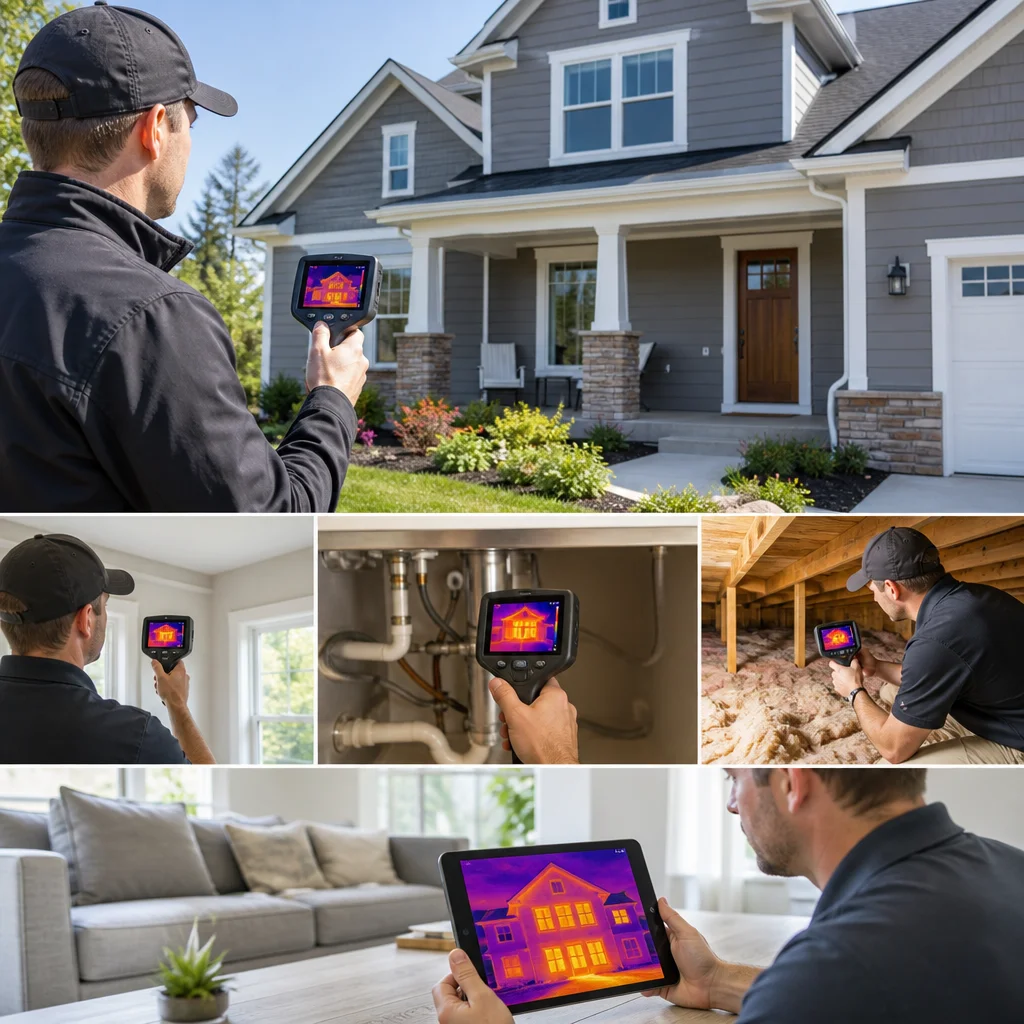
Our thermal imaging inspection begins with a complete visual walkthrough. This establishes context and identifies areas where thermal imaging will add the most value. We then systematically scan the property with professional-grade thermal equipment, paying particular attention to common problem areas: exterior walls, roofing, attic spaces, crawl spaces, basements, mechanical rooms, and around windows and doors.
We photograph thermal images showing any anomalies we discover. These images become part of your detailed inspection report, which we deliver the same day you complete your inspection. You receive both the thermal images themselves and our professional interpretation of what they mean for your home’s condition and safety.
Our inspectors are trained to distinguish normal temperature variations from genuine problems. Not every thermal anomaly indicates a serious issue, but our expertise helps us identify which findings require immediate attention and which are simply normal building characteristics.
Why Professional Grade Equipment Makes the Difference
Thermal imaging quality depends heavily on equipment specifications and operator expertise. Consumer-grade thermal cameras lack the resolution and sensitivity of professional systems, producing grainy, ambiguous images that are difficult to interpret reliably.
We use professional-grade thermal cameras that provide high-resolution images and precise temperature measurements. Combined with years of experience interpreting thermal signatures across thousands of inspections, our equipment delivers findings you can trust and act upon confidently.
The difference is real. A lower-quality thermal image might show a general cold area but fail to reveal its exact boundaries and severity. Professional equipment captures the precise thermal pattern, allowing us to identify the root cause and assess the scope of the problem accurately.
Common Home Issues We Discover Using Thermal Imaging
Moisture problems dominate our thermal imaging discoveries. Water infiltration around windows, foundation cracks, roof leaks, and plumbing failures all show up distinctly on thermal images long before visible damage appears. We’ve identified hidden mold sources, wet insulation, and structural decay that visual inspections completely miss.
Insulation deficiencies appear frequently in our thermal scans, particularly in attics and exterior walls. Builders sometimes compress insulation, skip sections, or fail to properly seal gaps around penetrations. Thermal imaging reveals these energy efficiency problems immediately.
Electrical issues including overloaded circuits, failing components, and unsafe connections generate heat that thermal cameras detect. These findings often require follow-up by a qualified electrician, but identifying them during inspection prevents potential fire hazards.
HVAC system problems appear as temperature imbalances and ductwork leakage. Radiant heating systems with failed zones show up clearly on thermal images, as do furnace and heat pump efficiency problems.
Peace of Mind Comes With Thorough Assessment
Home buying involves uncertainty and risk. You’re making a decision based on limited information, relying on professionals to help you understand what you’re purchasing. Thermal imaging eliminates an entire category of uncertainty by making hidden problems visible.
The reassurance of knowing your home’s true condition is invaluable. You move forward confidently, or you walk away knowing you avoided a problematic purchase. Either way, you’ve made an informed decision based on complete information rather than guesswork or incomplete inspections.
Our home inspection services include thermal imaging specifically because we understand that peace of mind matters. We approach every inspection as if we’re checking a home we would want our own families to occupy. That philosophy drives our commitment to thorough, honest, detailed assessment.
Getting Your Same-Day Report With Detailed Findings
After your thermal imaging inspection concludes, we process your findings and deliver a comprehensive report the same day. Your report includes photographs of any issues we discovered, thermal images showing the evidence, detailed explanations of what each finding means, and our professional recommendations for next steps.
We write our reports for homeowners, not for other inspectors. That means we explain technical findings in straightforward language, avoiding jargon and clearly describing what each problem means for your home’s safety, function, and value.
Your next step is straightforward: review your report, discuss findings with your real estate agent or attorney, and decide how to proceed with your purchase. If our inspection identifies issues, you’ll have the evidence and expert perspective needed to negotiate confidently with sellers or walk away from a problematic purchase.
We’ve completed thousands of inspections over more than a decade, and we’ve seen how thorough inspection with thermal imaging technology changes outcomes. Buyers who invest in comprehensive inspection with thermal imaging make better decisions, avoid costly surprises, and close with genuine confidence in their purchase.
Contact us to schedule your thermal imaging home inspection today.
Frequently Asked Questions (FAQ)
What can thermal imaging detect that a standard inspection might miss?
We use infrared thermal imaging to identify moisture intrusion, insulation gaps, electrical hotspots, and air leaks that aren’t visible to the naked eye. Our thermal cameras reveal temperature differences in walls, ceilings, and attics that indicate hidden problems like roof leaks, failing HVAC systems, and water damage before they become costly repairs.
How quickly will we receive our inspection report after the thermal imaging inspection?
We deliver your comprehensive inspection report the same day as your visit. Our detailed findings include thermal imaging data, photographs, and clear explanations of any issues we discovered, so you have the information you need to make confident decisions about your purchase.
Why is professional-grade thermal imaging equipment important for home inspections?
We invest in commercial-grade infrared cameras that provide accurate temperature readings and detailed imaging, unlike consumer-level equipment. This professional equipment allows us to detect subtle thermal patterns that indicate structural, electrical, or moisture problems, giving you reliable data to protect your investment.