

Table of Contents
- Why Pool and Spa Condition Matters in Your Home Purchase
- The Risks of Skipping Professional Pool Inspections
- What Our Comprehensive Pool and Spa Inspections Cover
- How We Identify Hidden Equipment and Structural Problems
- Safety and Code Compliance Assessment
- Detailed Same-Day Reporting for Your Peace of Mind
- Our Thermal Imaging Technology for Complete Pool Analysis
- Common Pool Issues We Discover and How to Address Them
- Investment Protection Through Professional Assessment
- Getting Started With Your Pool Inspection
- Frequently Asked Questions (FAQ)
Why Pool and Spa Condition Matters in Your Home Purchase
A swimming pool or spa can be one of the most appealing features of a home, but it’s also one of the most expensive systems to repair or replace. When you’re evaluating a property, understanding the true condition of these features directly impacts your final purchase decision and long-term ownership costs.
Pools and spas involve intricate mechanical, electrical, and structural components that deteriorate over time. A cracked shell foundation, failing pump, or corroded plumbing can cost $5,000 to $30,000 or more to address. Without a professional assessment, you might inherit significant repair obligations that weren’t reflected in the home’s asking price. We’ve conducted hundreds of pool and spa inspections, and most properties have at least one issue that buyers didn’t notice during casual walkthroughs.
Understanding the pool or spa’s current state gives you negotiating power before closing. You can request repairs, credits, or price adjustments based on documented findings. This transparency protects your investment and ensures you move forward with realistic expectations about maintenance and upkeep.
The Risks of Skipping Professional Pool Inspections
Many buyers assume a pool that looks clear and functions during a showing is in good condition. This assumption frequently leads to costly surprises after purchase.
Hidden structural damage develops beneath the water line and inside equipment enclosures. A shell might have small stress fractures that expand during freeze-thaw cycles, leading to leaks that drain thousands of gallons and damage surrounding soil. Electrical wiring can corrode inside conduit, creating shock hazards that aren’t visible during inspection. Pump motors may operate for a few more months before catastrophic failure.
Equipment age also matters significantly. A 15-year-old heater or filter system may appear functional but could fail within months. Replacing major components without warning creates budget strain and forces emergency contractor calls during peak seasons when costs spike.
Water chemistry imbalances indicate deeper circulation or sanitation problems. A pool with murky water or high chemical readings might be masking algae blooms, inadequate filtration, or microbial contamination. These conditions affect swimmer safety and can worsen rapidly if underlying equipment malfunctions go unaddressed.
Liability concerns arise when pool safety features are missing or non-compliant. Faulty drains, inadequate fencing, or non-functional safety gates create hazards and legal exposure. Without professional evaluation, you won’t identify these deficiencies until after you’ve assumed ownership and liability.
What Our Comprehensive Pool and Spa Inspections Cover
Our pool and spa inspections evaluate every major system and component with the same thoroughness we apply to general home inspections. We examine structural integrity, mechanical equipment, electrical systems, water quality, and safety compliance.
The structural assessment includes the shell, decking, and surrounding areas. We look for cracks, settling, discoloration, and other signs of deterioration. We also check for proper drainage, water level consistency, and signs of recent repairs that might indicate previous damage.
Equipment inspection covers pumps, filters, heaters, and circulation systems. We verify that each component operates correctly, assess remaining lifespan, and note any corrosion, leaks, or wear patterns. We check plumbing connections for loose fittings, corroded pipes, or improper installation.
Electrical systems receive detailed attention, including wiring condition, breaker functionality, ground-fault protection, bonding, and grounding compliance. Faulty electrical work in pools creates serious shock hazards that require immediate correction.
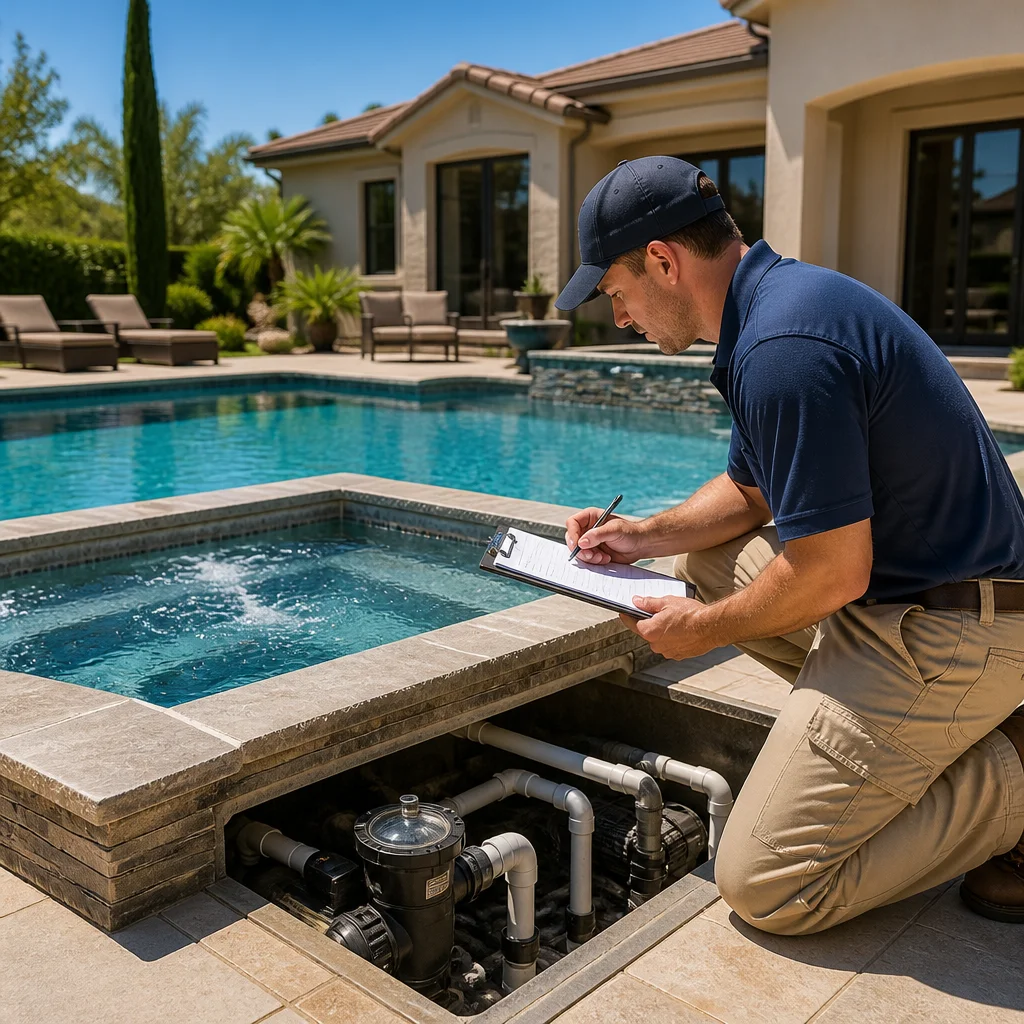
Water quality testing measures pH, chlorine or salt levels, alkalinity, and calcium hardness. We also evaluate circulation effectiveness and filtration performance. Imbalances point to underlying equipment problems or maintenance neglect.
Safety features are verified for compliance with current standards. We check for proper drain protection, adequate fencing, gate functionality, and required signage. Spas receive additional scrutiny for jet function, hot tub shell integrity, and chemical handling systems.
How We Identify Hidden Equipment and Structural Problems
We use visual inspection, operational testing, and specialized tools to uncover issues that casual observation misses.
Structural problems often hide beneath cosmetic features. We drain pools strategically during inspection to examine the shell interior for hairline cracks, blistering, or areas where previous patching has failed. We inspect decking edges and subsurface areas where moisture accumulates, as this is where concrete deterioration and erosion begin. We check expansion joints for separation and note any uneven settling.
Equipment problems reveal themselves through performance testing. We run pump systems and observe flow rates, listening for abnormal vibrations or grinding sounds that indicate bearing wear. We check filter pressure gauges for readings that suggest blockages or internal component failure. We inspect heat exchanger tubes for scale buildup or corrosion that restricts flow.
Plumbing connections receive detailed examination. We trace lines for evidence of previous leaks, improper sloping that traps water in pipes, or connections that may freeze and rupture during winter. We look for chemical injection systems that are corroded or improperly installed.
Our thermal imaging technology provides additional insight into subsurface conditions and equipment temperature variations that might indicate malfunction.
Safety and Code Compliance Assessment
Pool and spa safety regulations exist to prevent drowning, electrical shock, and chemical injuries. We verify compliance with current standards to ensure the property meets legal requirements and protects future occupants.
Drain safety is critical. Modern standards require drain covers that prevent hair and limbs from becoming trapped. We verify cover integrity and proper installation. We also check for adequate anti-entrapment devices and proper drain configuration.
Fencing and gates must meet specific height and spacing requirements to prevent unauthorized child access. We measure fence height, check gate closing mechanisms, and ensure latches function properly. Gaps in fencing are documented as compliance violations.
Electrical installations must include ground-fault circuit interrupter (GFCI) protection for all outlets near the pool. We verify GFCI functionality and check for bonding and grounding throughout electrical systems.
Chemical storage areas need proper ventilation and secondary containment. We assess how chemicals are housed and whether storage methods comply with safety guidelines.
These compliance checks protect you from liability and give you clear information about what remediation may be needed before you close.
Detailed Same-Day Reporting for Your Peace of Mind
We deliver comprehensive written reports on the same day as your inspection, because waiting for answers creates unnecessary stress during the purchasing timeline.
Our reports include photographs of key components, structural areas, and any deficiencies we identify. Visual documentation removes ambiguity and lets you understand issues clearly without technical jargon. We describe findings in straightforward language that makes sense to homeowners.
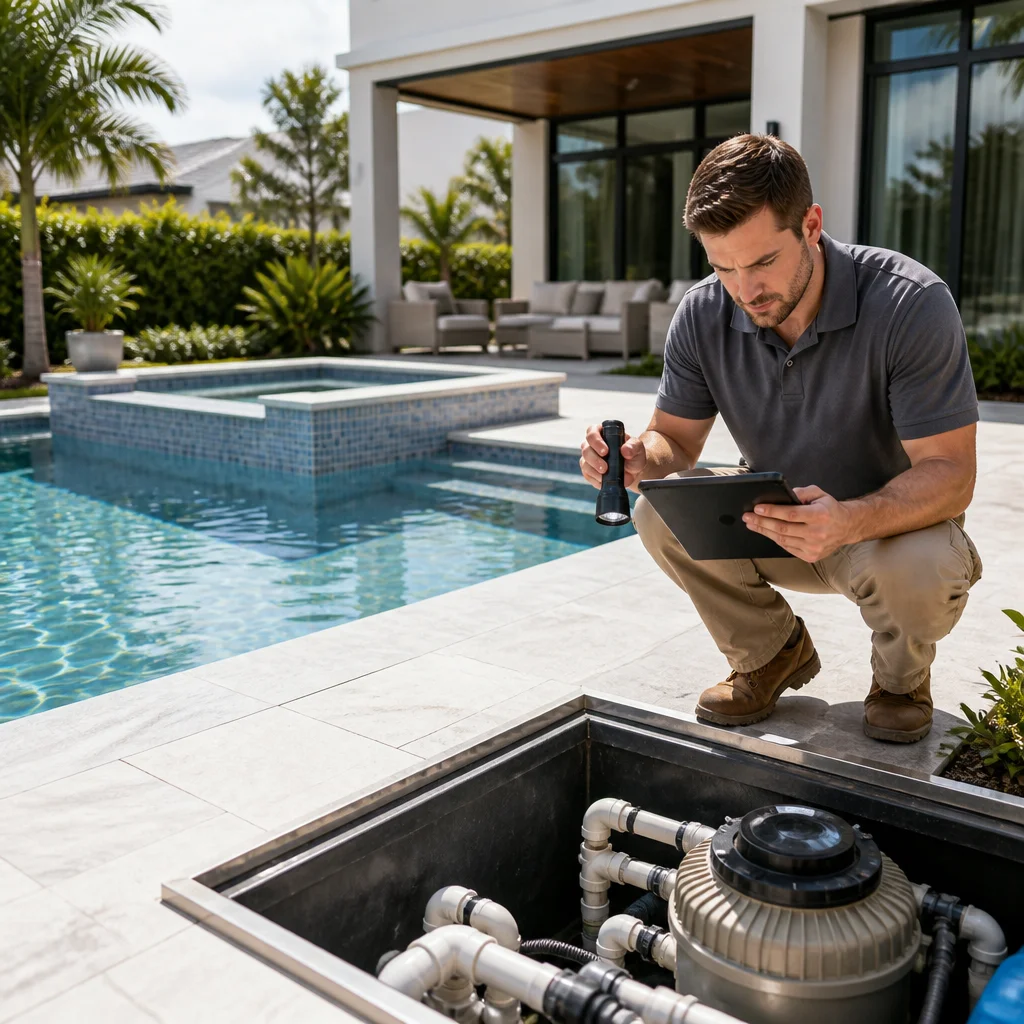
Each report details the condition of major systems, lists observed deficiencies with severity ratings, and explains what repairs or replacements may be needed. We prioritize findings by urgency, distinguishing between immediate safety concerns and items that can be addressed during normal maintenance cycles.
We provide context for recommendations. Rather than simply stating “pump needs replacement,” we explain why the pump is failing, what timeline you might expect, and what replacement options exist. This empowers you to make informed decisions about negotiation or future planning.
The report also includes our assessment of each item’s estimated remaining lifespan, helping you understand when major expenses are likely to arise.
Our Thermal Imaging Technology for Complete Pool Analysis
Infrared thermal imaging reveals temperature variations that indicate equipment problems, water circulation issues, or structural anomalies beneath visible surfaces.
In pool inspections, thermal imaging shows us heat loss patterns in heater systems, revealing whether heat exchangers are functioning efficiently or developing internal blockages. We can identify hot and cold spots in pipes that suggest circulation problems or incorrect valve positioning. The images show temperature gradients in pool shells that may indicate subsurface cracks or areas where water penetration is occurring.
For spas, thermal imaging verifies that heater systems are warming water uniformly and detects temperature inconsistencies that point to circulation or component failure. We can see whether insulation is intact or whether heat is escaping through areas where damage exists.
This non-invasive technology provides objective data that supports visual findings and uncovers issues that wouldn’t be apparent through inspection alone. We include thermal images in your report so you have visual proof of our findings.
Common Pool Issues We Discover and How to Address Them
Certain problems appear repeatedly across properties. Understanding these common issues helps you evaluate repair costs and negotiate more effectively.
Pump and motor wear is the most frequent finding. Pumps typically last 8 to 12 years with proper maintenance. We identify units approaching the end of their service life or already showing signs of imminent failure. Replacement costs range from $2,000 to $4,000 depending on system complexity.
Filter deterioration is nearly as common. Sand filters need replacement sand, cartridge filters accumulate debris loads that reduce efficiency, and DE (diatomaceous earth) filters can develop internal cracks. We assess filter condition and note whether recent maintenance has been adequate.
Heater problems develop through age, mineral buildup, or gas line corrosion. Non-functional heaters sometimes simply need cleaning, but others require replacement costing $1,500 to $3,000.
Plumbing leaks appear as wet spots in decking, areas of sunken concrete, or visible seepage around pool perimeters. Small leaks are often repair-friendly through patching, but larger structural leaks may require professional replastering or shell work.
Cracked or missing deck sections create trip hazards and allow water infiltration that damages underlying support structures. Concrete repair or replacement can cost $1,000 to $5,000 depending on affected area size.
Water discoloration from algae or metal staining indicates circulation or chemical balance problems. These conditions require treatment, equipment repair, and sometimes professional water services.
Understanding which issues you’re facing lets you obtain repair estimates and factor costs into your offer or negotiations.
Investment Protection Through Professional Assessment
Your home purchase is likely the largest financial commitment you’ll make. Protecting that investment begins with understanding exactly what you’re buying.
A detailed pool and spa inspection identifies problems before you’re legally obligated to purchase. This information gives you leverage to request seller repairs, price reductions, or closing credits that offset repair costs. Without inspection data, you’re negotiating without facts.
Professional assessment also provides you with repair estimates and maintenance information that shape your ownership budget. You’ll understand what major expenditures lie ahead and can plan accordingly. This knowledge eliminates post-purchase surprises and helps you prioritize improvements.
If inspection reveals extensive problems, this information may influence your decision about whether to proceed with the purchase at all. Some buyers decide that the property’s overall condition or required repairs make it a poor investment for their circumstances. Having clear data before closing gives you that option.
For properties with pools or spas, professional inspection is as essential as evaluating the roof, foundation, or plumbing systems. These features represent significant value and require significant investment to maintain or repair.
Getting Started With Your Pool Inspection
When you’re ready to schedule a pool and spa inspection, contact us with your property address and preferred inspection date. We coordinate scheduling around your real estate agent’s timeline and the seller’s availability.
Before your inspection, we’ll provide you with details about what to expect and any information that helps us prepare. On inspection day, we arrive with all necessary testing equipment, thermal imaging cameras, and documentation tools. The inspection typically takes one to two hours depending on pool size and system complexity.
Our inspector performs all testing while you observe, explaining findings as we progress. We answer questions throughout the process and ensure you understand what we’re evaluating and why.
After the inspection concludes, we process all data and photography to compile your comprehensive report. You receive the complete report the same day, allowing you to move forward with confidence in your purchasing decision.
If you’re buying a home with a pool or spa, professional inspection protects your investment and ensures your family will enjoy the property safely. We’re ready to help you understand your potential purchase completely.
Frequently Asked Questions (FAQ)
Why should we get a professional pool inspection before buying a home?
We recommend a professional pool inspection because pools and spas involve complex equipment, electrical systems, and structural components that require specialized knowledge to assess properly. Our inspections identify issues like failing pumps, leaks, code violations, and safety hazards that could cost thousands to repair after your purchase. We help you understand the true condition of the pool before you commit to the property, giving you the information needed to negotiate repairs or pricing adjustments.
What does our pool and spa inspection process include?
We conduct a thorough assessment of all pool and spa systems, including pumps, filters, heaters, plumbing, electrical connections, structural integrity, and safety features like handrails and fencing. Our inspectors use thermal imaging technology to detect temperature variations that reveal circulation problems and equipment malfunctions invisible to the naked eye. We also verify that systems meet current safety codes and regulations, then provide you with a detailed same-day report documenting our findings and recommendations.
How quickly can we schedule a pool inspection?
We understand that home purchases move quickly, so we work to accommodate inspections within your timeline and typically deliver comprehensive reports the same day we complete the assessment. You can start the scheduling process on our website or contact us directly to find a time that fits your home-buying timeline.