
Table of Contents
- Why Pool and Spa Inspections Matter for Your Home Purchase
- The Hidden Risks Buyers Miss Without Professional Expertise
- What Comprehensive Pool Inspection Actually Includes
- Our Thermal Imaging Technology Reveals What Others Miss
- Safety Standards and Code Compliance We Verify
- How We Deliver Detailed Reports the Same Day
- Pool Equipment Assessment and Functional Testing
- Spa Systems and Jet Evaluation
- Water Quality and Chemical Balance Concerns
- Structural Integrity and Leak Detection Methods
- Your Next Steps to Schedule a Complete Inspection
- Frequently Asked Questions (FAQ)
Why Pool and Spa Inspections Matter for Your Home Purchase
A swimming pool or spa can add significant value and enjoyment to a property, but it also represents a major financial commitment. When you’re purchasing a home with these amenities, skipping a professional inspection can lead to thousands of dollars in unexpected repairs. Most home buyers focus their attention on the structure and systems inside the house, yet pools and spas involve specialized equipment, plumbing, electrical connections, and structural components that require trained evaluation.
We’ve completed inspections on properties where buyers assumed the pool was “in perfect condition” based on a quick walk-around, only to discover failing pumps, cracked shells, or outdated safety equipment weeks after closing. These oversights become costly when you’re already settled into your new home. A thorough pool and spa inspection before purchase gives you clear information about what you’re buying and what maintenance or repairs may lie ahead.
The Hidden Risks Buyers Miss Without Professional Expertise
Pool and spa systems contain multiple interconnected components that must work in harmony. A failing pump doesn’t always show obvious warning signs, and small cracks in the pool shell can grow into major structural problems if left unaddressed. Similarly, spa jets may operate but circulate water inefficiently if underlying issues affect the hydrotherapy system.
Here are common risks we uncover during inspections:
- Pump motor failure or insufficient flow rate, which affects water circulation and chemical balance
- Cracks in the pool shell or structural shifts that compromise integrity
- Leaks in underground plumbing lines that drain resources and damage surrounding soil
- Improper grounding or electrical hazards in pump and spa control systems
- Degraded pool decking that creates slip hazards and allows water infiltration
- Outdated safety equipment that no longer meets current codes
Many buyers don’t realize that a pool or spa isn’t like a car where you can hear the engine run and visually confirm operation. Equipment can appear functional while underlying damage develops. Without professional assessment, you may inherit someone else’s deferred maintenance.
What Comprehensive Pool Inspection Actually Includes
Our pool and spa inspections evaluate the entire system from multiple angles. We examine the shell structure, equipment mechanical condition, operational functionality, safety features, and water chemistry. This approach ensures nothing is overlooked.
Our inspection scope covers:
- Visual inspection of the pool or spa shell for cracks, patching, and structural integrity
- Assessment of the pump, motor, and circulation system for proper operation and efficiency
- Filter system evaluation, including sand filters, cartridge filters, and diatomaceous earth filters
- Examination of all plumbing connections, valves, and potential leak points
- Electrical systems and equipment grounding for safety compliance
- Deck condition, drainage, and surrounding area assessment
- Safety equipment verification, including ladders, railings, and drain covers
- Water chemistry testing and balance evaluation
- Documentation of all findings with clear photographs and explanations
We don’t just note that equipment “works.” We test its actual performance, check pressures and flow rates, and identify components approaching end-of-life even if they’re currently functional.
Our Thermal Imaging Technology Reveals What Others Miss
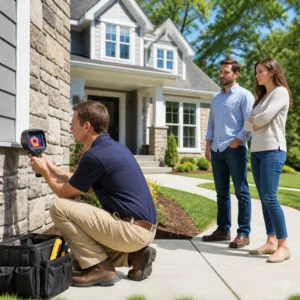
We use advanced infrared thermal imaging to detect issues invisible to the naked eye. Temperature variations in pool shells or surrounding concrete can reveal hidden leaks, structural problems, or circulation issues that standard visual inspection would miss.
Thermal imaging helps us identify:
- Water seeping through cracks or structural failures before they become catastrophic
- Temperature inconsistencies in spa jets that indicate circulation problems
- Moisture trapped beneath decking materials that signal water infiltration
- Inefficient heater performance that wastes energy
- Electrical hotspots that may indicate safety hazards
This technology provides objective data we include in your free infrared scans, giving you visual evidence of any concerns we identify. You’ll see exactly what the thermographic images reveal, not just our verbal description.
Safety Standards and Code Compliance We Verify
Pool and spa safety standards have evolved significantly over the past decade. Properties may have older equipment that functioned safely when installed but no longer meets current codes. Our inspections verify compliance with modern safety requirements designed to protect swimmers and prevent drowning.
We check for:
- Compliant drain covers that prevent entrapment hazards
- Proper equipment bonding and grounding to prevent electrical shock
- Adequate fencing, gates, and access control meeting local residential codes
- Functional safety switches and disconnect devices
- Compliant depth markings and signage
- Proper deck construction without tripping hazards
If we identify code violations, we clearly document them in your report so you understand what upgrades or corrections may be necessary. This information helps you budget for compliance work and negotiate with the seller if needed.
How We Deliver Detailed Reports the Same Day
We understand that home buying moves quickly. Our same-day inspection reports mean you have detailed findings when you need them, not days later. After we complete your pool and spa inspection, we compile a comprehensive report that explains every finding in language you can understand.
Our reports include:
- Detailed photographs of equipment, structures, and any concerns identified
- Functional test results with measurements and performance data
- Explanations of normal wear versus items requiring attention
- Clear recommendations for repairs, maintenance, or upgrades
- Prioritization of findings by urgency and safety importance
- Estimated cost considerations for significant repairs
You’ll receive your report electronically the same day of inspection, allowing you to share it with your real estate agent, contractor, or home inspector for second opinions if desired. This timeline keeps your home purchase process moving while ensuring you have reliable information.
Pool Equipment Assessment and Functional Testing
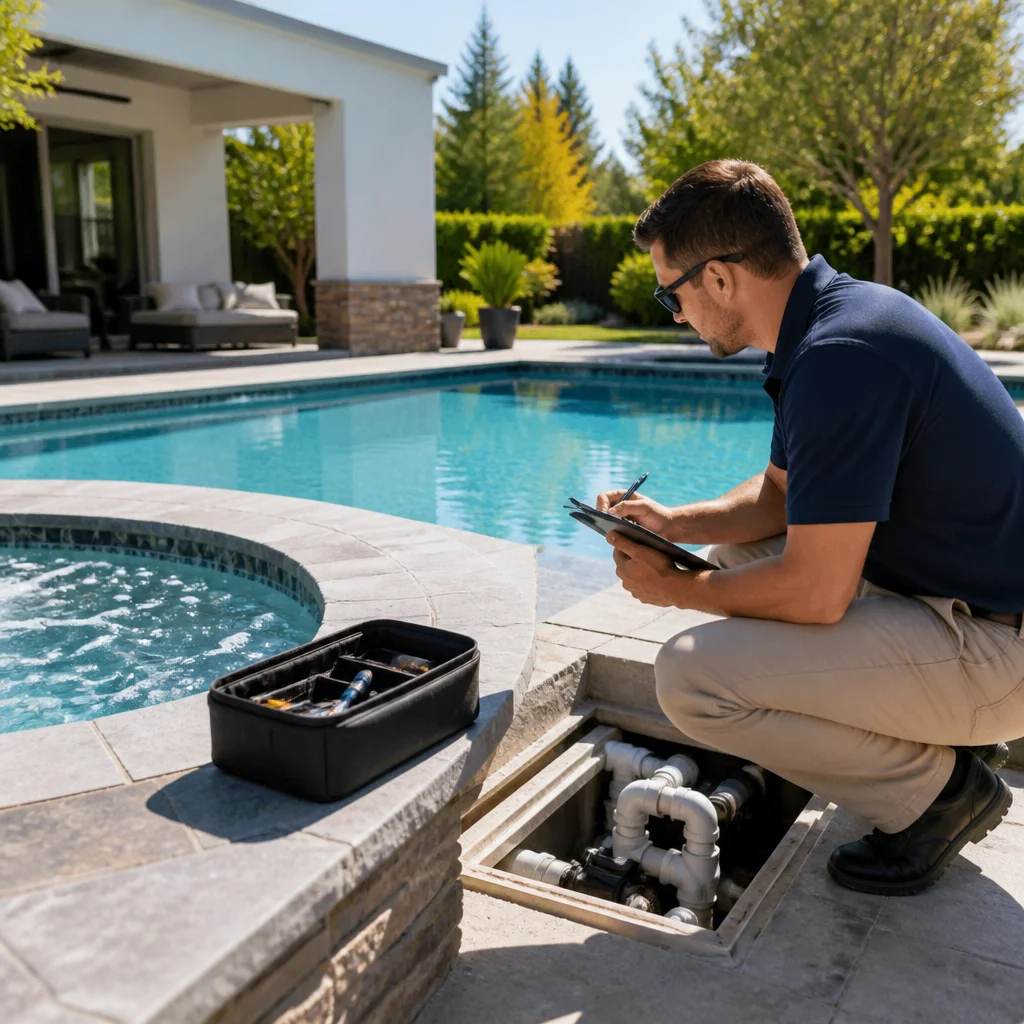
The pump, motor, and circulation system form the heart of pool operation. We test pump flow rates and pressure readings under running conditions to confirm they fall within manufacturer specifications. A pump that seems to run fine may actually be delivering insufficient flow, which compromises water circulation and chemical effectiveness.
We also evaluate:
- Motor amperage and voltage to identify electrical imbalances
- Seal condition and potential leakage around the pump housing
- Impeller condition and cavitation risk
- Check valves and one-way flow components for proper function
- Strainer basket condition and debris accumulation
- Equipment mounting and vibration issues
Filter systems receive equal attention. Sand filters, cartridge filters, and DE filters all have different maintenance needs and end-of-life indicators. We assess filter pressure readings, backwash capability, and overall condition to estimate remaining useful life.
Spa Systems and Jet Evaluation
Spas are more complex than many buyers realize. Multiple jets rely on proper water distribution, adequate pressure, and functioning check valves. When you turn on the jets and water flows, everything might seem fine, but we test actual pressure at individual jets and trace water distribution through the manifold system.
Our spa evaluation includes:
- Individual jet flow testing to confirm equal pressure distribution
- Manifold valve operation and switching functionality
- Air blower operation for air jet systems
- Heater function and temperature control accuracy
- Control panel and timer function verification
- Jet nozzle condition and replacement needs
- Circulation pathway assessment for blockages
We explain what we find in practical terms. For example, if some jets produce weak flow while others are strong, that indicates a distribution problem requiring service, not just spa maintenance preference.
Water Quality and Chemical Balance Concerns
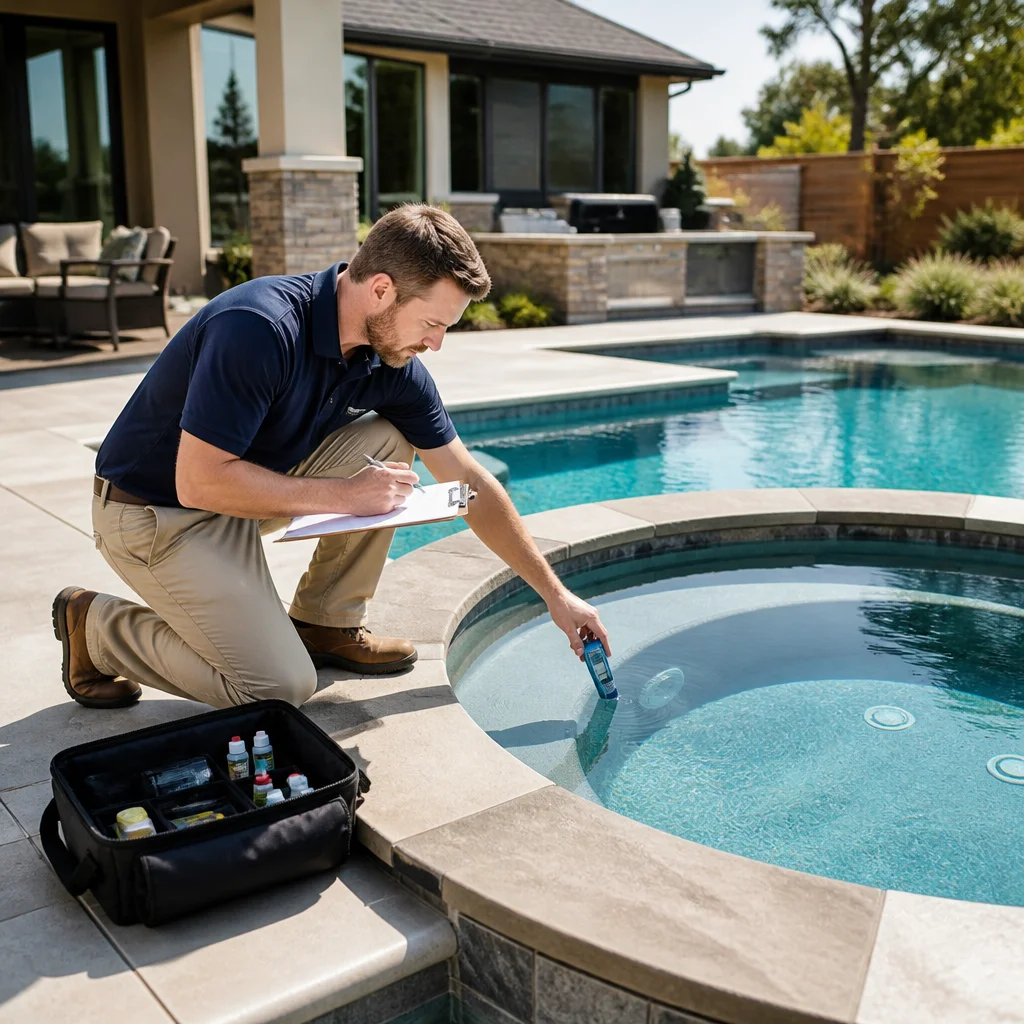
While we’re not pool chemists, we test water chemistry to confirm it’s being properly maintained. Improper chemical balance can damage equipment, cloud the water, or create health hazards. We measure pH, chlorine levels, alkalinity, and calcium hardness to provide baseline readings at inspection.
These tests tell us:
- Whether the current owner maintains the pool responsibly
- If chemical balance issues are causing equipment corrosion
- Whether water is safe for swimming at the time of inspection
- If the filtration system is effectively managing water quality
- Whether ongoing maintenance appears feasible or neglected
We document current chemistry so you understand the baseline. As the new owner, you’ll need to establish your own testing routine or hire a pool service for ongoing management.
Structural Integrity and Leak Detection Methods
Pool shells fail for multiple reasons: ground settling, hydrostatic pressure, freeze-thaw cycles, or simple age. We visually examine the entire shell surface for cracks, patches, and signs of repair. We look for green algae or staining that might indicate persistent moisture issues or circulation problems.
We perform leak detection by:
- Adding dye near suspected leak points while observing water movement
- Checking for consistent water level drop that indicates evaporation versus leaks
- Examining decking around the pool perimeter for moisture or soft spots
- Testing visible cracks with our hands to assess depth and severity
- Using thermal imaging to detect subsurface moisture migration
If we detect evidence of leaking, we document findings thoroughly. Some leaks are easily repaired; others require resurfacing or structural work. You deserve to know the scope before purchase.
Your Next Steps to Schedule a Complete Inspection
Once you’re under contract on a home with a pool or spa, scheduling an inspection protects your investment. We recommend completing the inspection during your standard inspection period so you have time to address findings or renegotiate terms if necessary.
To move forward:
- Contact us through our home inspection services page or call to discuss your specific property
- Schedule your pool and spa inspection alongside your general home inspection for convenience
- Be present during the inspection if possible to ask questions and see our findings firsthand
- Review your same-day report carefully and reach out with any clarification questions
- Use the report to guide your next conversation with your real estate agent or the seller
With over 3,700 inspections completed, we bring thorough experience and attention to detail that protects your confidence in any property. We’re here to help you make an informed decision about your home purchase.
Frequently Asked Questions (FAQ)
What does our pool and spa inspection include?
We evaluate all visible structural components, equipment functionality, and safety features of your pool or spa. Our assessment covers pumps, filters, heaters, jets, plumbing connections, decking condition, and chemical balance. We also use thermal imaging to detect leaks and structural issues that aren’t visible to the naked eye, delivering our findings in a detailed same-day report.
Why should we check for pool leaks before buying?
A leak can cost thousands to repair and may indicate deeper structural problems with your investment. We use specialized thermal imaging technology to identify water loss patterns and pinpoint leak locations without guesswork. Catching these issues during your inspection protects you from unexpected expenses and ensures you understand the true condition of the property.
How do we verify that pool and spa systems meet safety standards?
We inspect electrical connections, bonding systems, and equipment installations against current building codes and safety regulations. Our evaluation includes checking for proper drain safety covers, equipment grounding, and operational controls that protect swimmers. We document our findings so you know whether upgrades or repairs are needed to bring systems into compliance.