
Table of Contents
- 1. Why Septic and Water Well Testing is Non-Negotiable for Your Home Purchase
- 2. Understanding Septic System Inspections and What We Look For
- 3. Comprehensive Water Well Testing Procedures That Protect Your Investment
- 4. How Our Aerobic Septic System Testing Differs from Standard Inspections
- 5. Identifying Common Septic and Well Issues Before They Become Costly Problems
- 6. Interpreting Your Septic and Water Well Test Results
- 7. The Long-Term Cost Savings of Proper System Testing and Maintenance Planning
- 8. Why Professional Testing Provides the Certainty You Need During Home Purchase
- Frequently Asked Questions (FAQ)
1. Why Septic and Water Well Testing is Non-Negotiable for Your Home Purchase
When you’re buying a home on a private septic system or private water well, you’re taking on responsibility for systems that municipal water and sewer departments typically manage for urban properties. These systems are critical to your home’s functionality and safety, yet they’re often overlooked during the purchasing process. We understand the stakes involved, and that’s why septic and water well testing must be a priority before you finalize your investment.
A failing septic system or contaminated water well doesn’t announce itself with warning lights. Instead, you discover the problem after closing, and the repair bill arrives months later when you’re already financially stretched from the down payment and moving costs. Replacing a septic system can cost $3,000 to $25,000 or more, depending on soil conditions and system type. A contaminated well requiring treatment or replacement adds thousands more.
Testing these systems before purchase gives you three critical advantages: you’ll know what you’re inheriting, you can negotiate repairs or credits with the seller, and you can plan your maintenance budget with confidence. We’ve completed over 3,700 inspections, and we’ve seen firsthand how often homebuyers skip septic and water testing only to face unexpected problems within the first year of ownership.
The real risk isn’t just the money. A failing septic system creates environmental hazards and can contaminate your groundwater and your neighbors’ wells. Poor water quality affects your family’s health and your home’s resale value. These aren’t theoretical concerns, they’re direct threats to your investment and your peace of mind.
What to do next: Schedule septic and water well testing as part of your home inspection services, not as an afterthought. Request these tests during your inspection period, before your contingencies expire.
2. Understanding Septic System Inspections and What We Look For
A septic system inspection goes beyond a surface-level walk-around. We evaluate the tank’s condition, check for signs of leakage, assess the drain field, and determine whether the system is properly sized for your household. We look at how well maintenance has been performed and whether the tank has been pumped regularly.
During our inspection, we examine:
- Tank structural integrity (cracks, corrosion, settling)
- Inlet and outlet baffles (critical for proper flow)
- Sludge and scum levels (indicates maintenance history)
- Drain field vegetation and surface conditions (signs of system failure)
- Backup or gurgling in fixtures (evidence of system stress)
- System sizing relative to the home’s square footage and bedroom count
We also check for environmental red flags: trees growing over the drain field, gravel pits nearby, standing water in the yard, or evidence of previous repairs. These details tell us whether the system is struggling or approaching failure.
What separates a thorough inspection from a cursory one is documentation. We photograph the system, measure tank dimensions, record the condition of accessible components, and note the location of the tank and drain field so you know where your system is and what access you’ll need for future pumping and maintenance.
3. Comprehensive Water Well Testing Procedures That Protect Your Investment
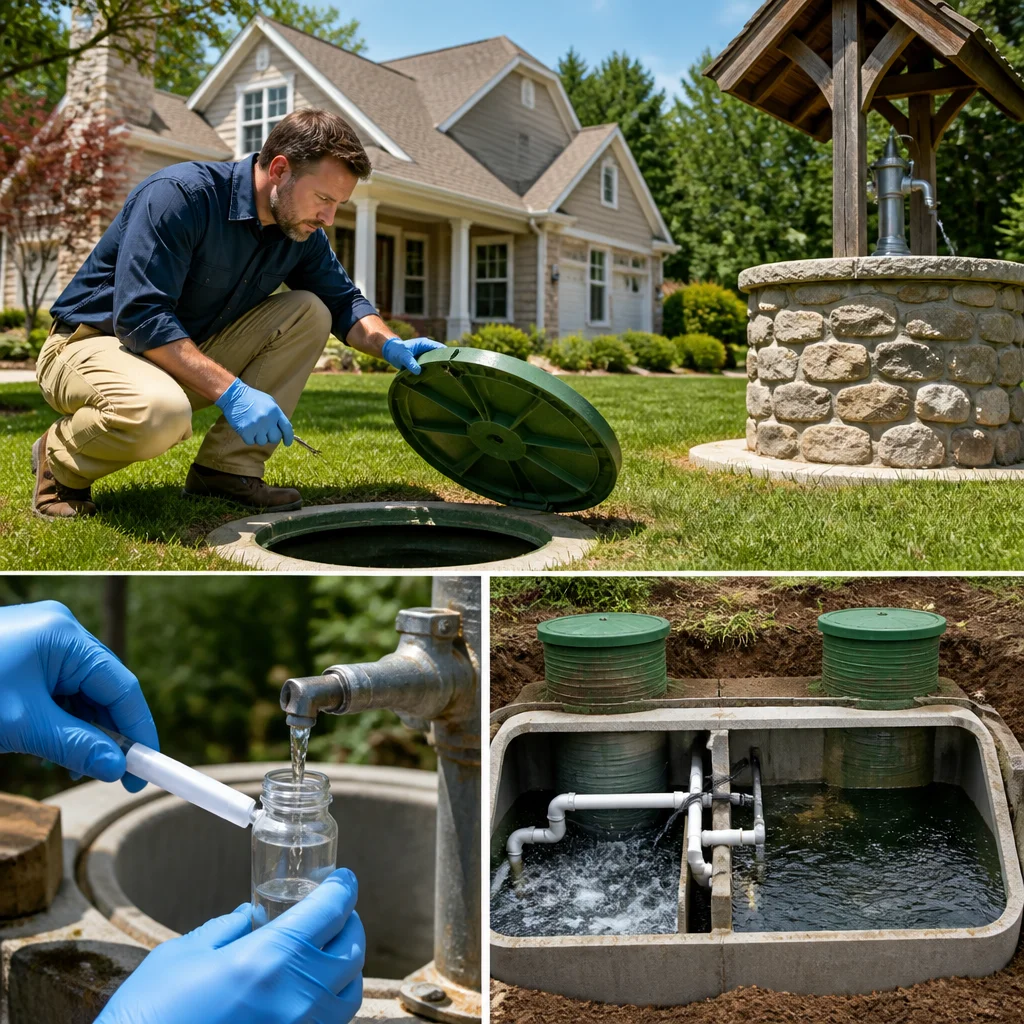
Water quality testing examines whether your well water is safe to drink and suitable for household use. We test for bacteria, nitrates, pH levels, hardness, and other contaminants that can affect your health or damage your plumbing and appliances.
Our water well testing covers:
- Bacteriological testing (E. coli and total coliform bacteria)
- Nitrate levels (a sign of septic or agricultural contamination)
- pH and acidity (affects taste and corrosiveness)
- Hardness and mineral content
- Iron and manganese (cause staining and discoloration)
- Dissolved solids and conductivity (indicates overall water quality)
A single test snapshot shows you the current condition, but we also recommend asking the seller about historical test results if they’re available. Trending data over years tells you whether water quality is stable or deteriorating.
Beyond basic chemistry, we assess the well’s physical condition: the wellhead seal, the condition of the pump and pressure tank, and whether the well has been maintained according to local regulations. A poorly sealed wellhead allows surface contamination to enter the system, which is a critical safety issue.
4. How Our Aerobic Septic System Testing Differs from Standard Inspections
If your potential home has an aerobic septic system (also called an extended aeration system), it requires specialized knowledge that goes beyond conventional septic inspection. Aerobic systems use mechanical aeration to speed up the treatment of waste, making them more powerful than gravity-fed conventional systems but also more complex to evaluate.
We understand the nuances of aerobic systems:
- Timer and electrical control functions (must work reliably)
- Aerobic treatment tank condition and disinfection methods
- Pump operation and cycle timing
- Effluent filter function (critical to prevent drain field failure)
- Properly sized tanks for the treatment process
Standard septic inspectors often lack the technical foundation to assess aerobic systems properly. We evaluate whether the system is operating at full capacity, whether maintenance has been performed on schedule, and whether the electrical and mechanical components show signs of wear or imminent failure.
Aerobic systems are an investment in themselves. The mechanical components require regular service, and if the aeration pump fails, your system stops treating waste effectively. Understanding the system’s age, maintenance history, and current operational status is essential before you commit to ownership.
5. Identifying Common Septic and Well Issues Before They Become Costly Problems
Certain problems appear repeatedly across properties we inspect, and catching them early saves you thousands in repair costs and prevents property damage.
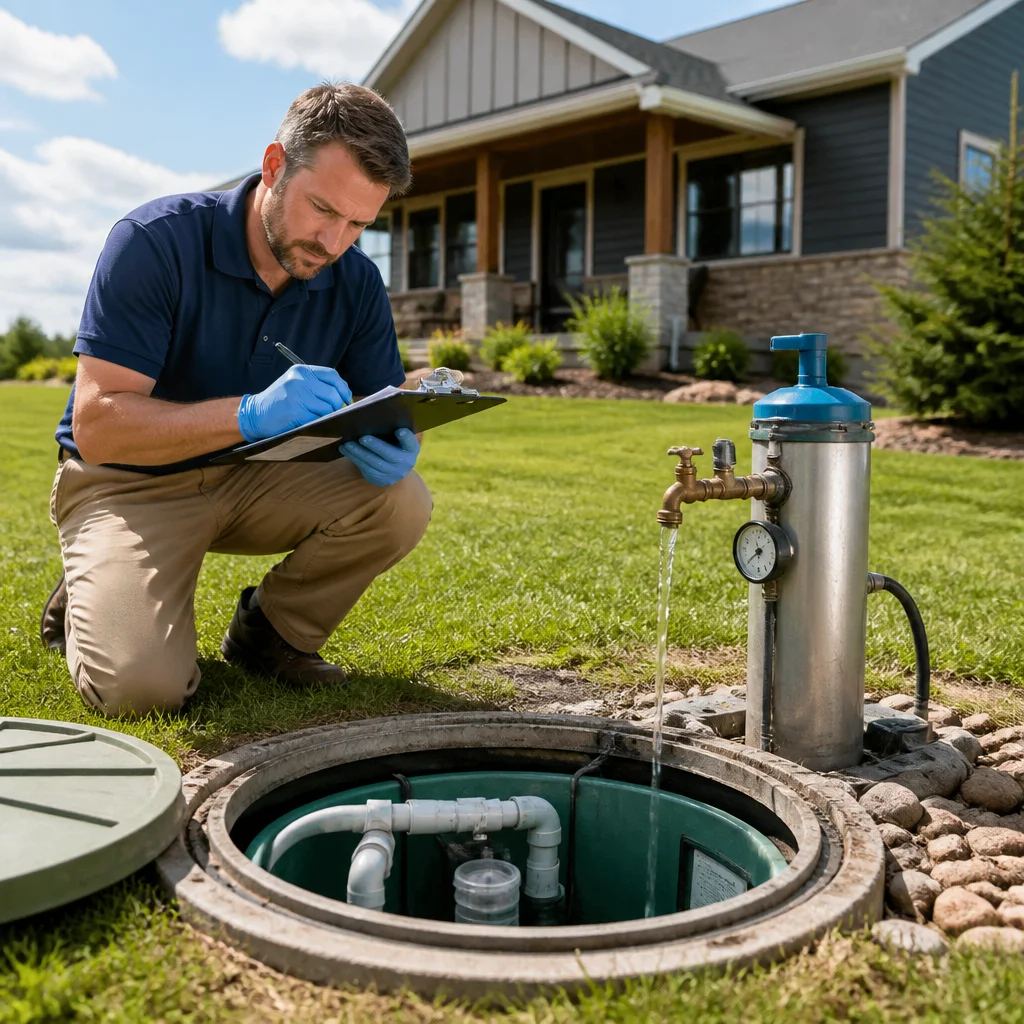
Common septic issues include:
- Inadequate tank size for the home’s occupancy (common in older homes or those that have been expanded)
- Failed or collapsing drain fields (evidenced by soggy soil or lush vegetation)
- Tree root intrusion into tank or drain lines
- Missing or deteriorated tank access covers
- Insufficient clearance between septic components and property lines or water sources
- System overload from excessive water use or poor maintenance
Common well issues include:
- Bacterial or nitrate contamination (requires treatment or abandonment)
- Insufficient water pressure or low yield (indicates pump failure or aquifer depletion)
- High iron or sulfur content (causes discoloration and odor)
- Wells positioned too close to septic systems (cross-contamination risk)
- Old wells without proper sealing (safety and contamination hazards)
We document each finding with photographs and clear descriptions so you understand the severity and can make informed decisions. A minor issue like high iron content is manageable with treatment; a contaminated well close to the septic system is a much more serious problem that might require well abandonment and drilling a new one.
6. Interpreting Your Septic and Water Well Test Results
Test results come back as numbers and lab reports, but what do they actually mean for your home and your budget?
For water quality, labs provide results in parts per million (ppm) or milligrams per liter (mg/L). The EPA sets Maximum Contaminant Levels (MCLs) for drinking water safety. If your test shows results above the MCL for bacteria or nitrates, the water isn’t safe to drink without treatment. Below the MCL means the water meets drinking water standards, though you might still want treatment if mineral content is very high or if you prefer specific characteristics like lower hardness.
For septic systems, we describe conditions in terms of tank fill levels, visible damage, and system age. A tank at 50% capacity suggests normal operation and regular pumping. A tank at 90% fill with visible scum indicates poor maintenance or system failure. A tank that’s 30 years old might be nearing the end of its expected lifespan, even if it’s currently functional.
We provide clear recommendations with each finding. Some issues require immediate attention before closing; others are maintenance items you should plan for after purchase. We distinguish between showstopper problems and manageable concerns so you can prioritize your negotiations with the seller.
7. The Long-Term Cost Savings of Proper System Testing and Maintenance Planning
Septic and water systems aren’t “set it and forget it” investments. Regular maintenance costs a few hundred dollars annually and protects systems worth tens of thousands. A thorough pre-purchase inspection tells you what maintenance the previous owner performed (or didn’t), and it helps you establish a baseline for future care.
If your septic tank is pumped every three to five years as recommended, you’ll extend its lifespan significantly. A tank that’s never pumped fails within years; a well-maintained tank lasts 20-40 years or longer. The cost difference between preventive pumping ($300-$500) and replacing a failed system ($10,000+) is dramatic.
Water well maintenance is simpler but equally important. Annual water testing ensures early detection of contamination. If a treatment system becomes necessary, catching the problem early means installing a manageable solution rather than dealing with an emergency.
We help you understand what maintenance schedule your specific system requires and what costs to expect. This information becomes part of your long-term homeownership budget and protects your investment over decades.
8. Why Professional Testing Provides the Certainty You Need During Home Purchase
Buying a home is the largest financial decision most people make. Septic and water systems are essential to that home’s livability and value, yet they’re invisible and poorly understood by most buyers. Professional testing removes uncertainty and gives you the factual information you need to negotiate confidently.
When you have comprehensive testing completed before closing, you’re not guessing about system condition. You have laboratory results, photographic documentation, and expert analysis based on over 3,700 inspections and years of field experience. That certainty allows you to move forward with confidence or to renegotiate terms with the seller based on documented findings.
We approach every inspection as if we’re buying the home ourselves. We ask the questions you should ask, we test the systems thoroughly, and we provide clear, honest reporting in language you can understand. We document our findings so you have the evidence you need during negotiations and the reference material you’ll need for future maintenance.
The peace of mind that comes with knowing your water is safe and your septic system is sound is priceless. That certainty starts with professional experienced home inspections that specifically include septic and water well testing.
Don’t leave the condition of your home’s most critical systems to chance or to a cursory glance. Schedule comprehensive septic and water well testing as part of your home purchase process and invest in the clarity and confidence you deserve.
Frequently Asked Questions (FAQ)
What does our septic and water well testing include?
We conduct a thorough assessment of your septic system’s overall condition, tank integrity, and drain field functionality, along with comprehensive water quality testing for your well. Our testing identifies potential issues like system failure, contamination, or inadequate capacity before they become expensive problems. We provide detailed findings in our same-day report so you have the information you need to make an informed purchasing decision.
How does aerobic septic system testing differ from what we do with conventional systems?
We understand that aerobic systems operate differently than standard anaerobic septic tanks, requiring specialized knowledge of their mechanical components, oxygen levels, and treatment processes. Our aerobic septic testing evaluates the system’s pump function, timer operation, and treatment effectiveness to ensure it meets your home’s specific needs. This targeted approach allows us to identify issues that a general inspection might miss.
Why should we test the water well before closing on our home purchase?
We recommend well testing because private water systems aren’t regulated like municipal supplies, and contamination or quality issues may not be immediately obvious to the naked eye. Our testing evaluates bacterial presence, chemical composition, and overall safety to confirm your water meets appropriate standards for household use. This protects your family’s health and helps you understand any long-term maintenance or treatment costs associated with your water system.


