
Table of Contents
- Why Pool and Spa Inspections Matter During Your Home Purchase
- Common Hidden Problems We Discover in Residential Pools and Spas
- Critical Safety Questions to Ask Before Buying a Home With a Pool
- Understanding Pool Equipment Condition and Maintenance Costs
- Chemical Systems and Water Quality Red Flags
- Structural Integrity Issues Our Inspections Reveal
- Spa-Specific Inspection Concerns and Testing Standards
- How Our Comprehensive Pool Inspection Process Works
- What Our Detailed Reports Include and Why They Matter
- Protecting Your Investment With Professional Assessment
- Frequently Asked Questions (FAQ)
Why Pool and Spa Inspections Matter During Your Home Purchase
A swimming pool or spa can be a fantastic amenity, but it’s also one of the most expensive features on a residential property to repair or replace. When you’re evaluating a home with a pool, treating it like any other critical system is essential. The difference between a well-maintained pool and one requiring major work can easily be tens of thousands of dollars.
Many home buyers assume a pool “just works” because the current owner has been using it without incident. That assumption can be costly. Underlying structural damage, aging equipment, or chemical imbalances may not be obvious during a casual walkthrough. We’ve inspected hundreds of pools where the surface looked acceptable but the pump, filter, or plumbing was on the verge of failure.
A dedicated pool and spa inspection gives you the detailed information needed to negotiate repairs, request credits, or walk away confidently. It protects your investment by identifying conditions before you take ownership and assume liability for repairs.
Common Hidden Problems We Discover in Residential Pools and Spas
During our pool inspections, we regularly uncover issues that homeowners didn’t realize existed. Understanding these common problems helps you know what questions to ask.
Failing pumps and motors are among the most frequent issues we find. A pump might run and circulate water today but fail within months. Replacing a pool pump and motor system typically costs $1,500 to $3,500 depending on size and horsepower. If you’re not prepared for that expense in your first year of ownership, it creates immediate stress.
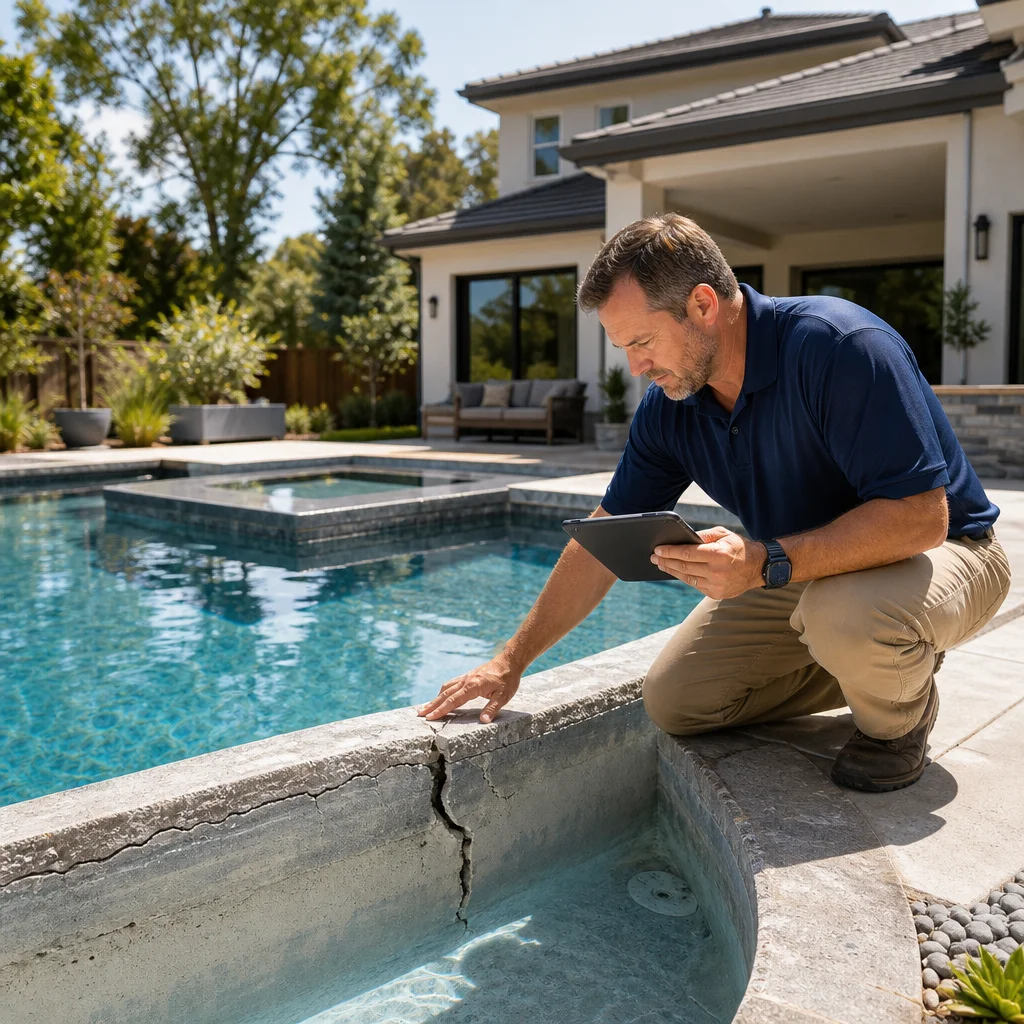
Deteriorating concrete and tile surfaces develop cracks that allow water to escape and structural damage to worsen. Small cracks become major problems when water seeps behind the shell or deck. We document these issues with photographs so you understand the scope of potential repair costs.
Leaks and water loss might seem obvious, but the source often isn’t. A leak could originate from a crack in the pool shell, damaged plumbing lines, faulty light fixtures, or a failing skimmer. Diagnosing the exact location requires systematic testing that many buyers overlook.
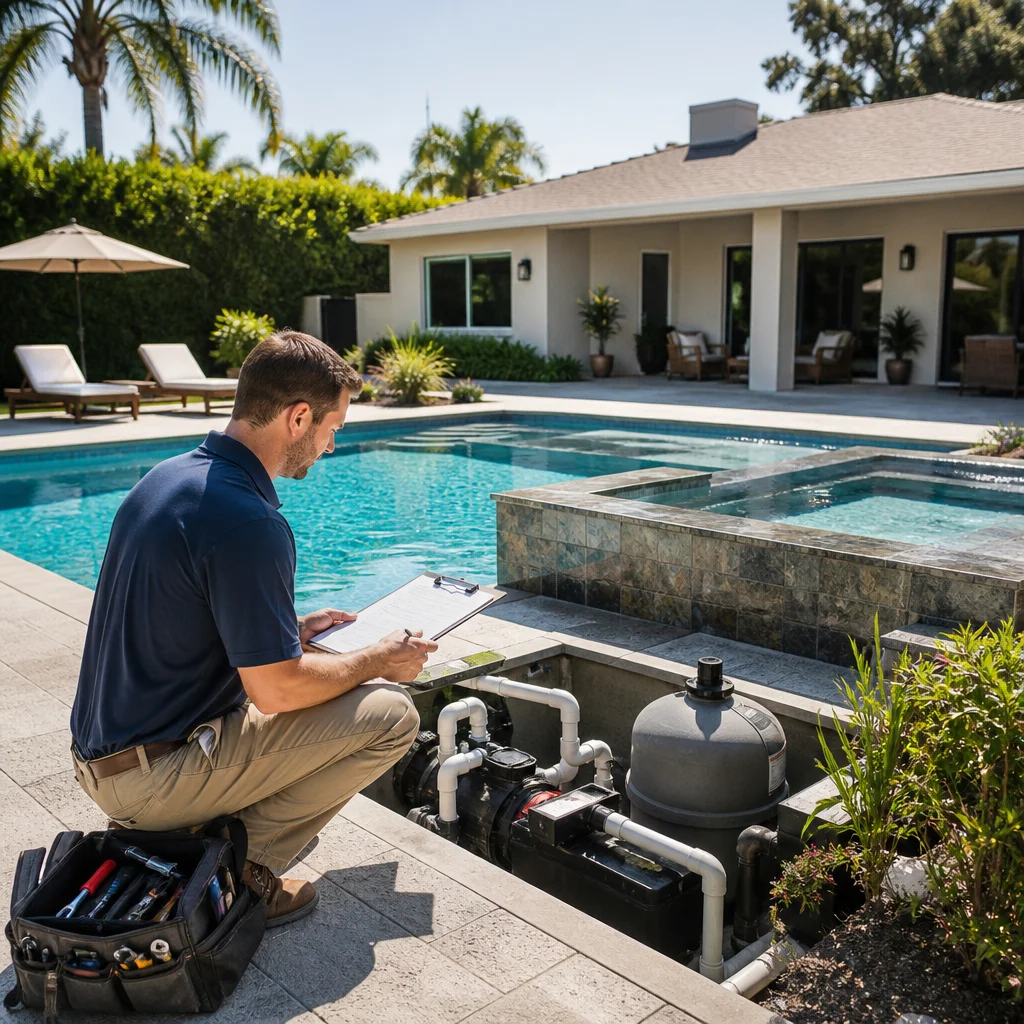
Corroded or incompatible equipment creates safety and functionality concerns. We inspect the heater, filter system, circulation lines, and chemical feeders for rust, leaks, corrosion, and proper operation. Equipment compatibility matters too; mismatched components reduce efficiency and increase maintenance costs.
Deteriorated or missing coping and decking affects both safety and aesthetics. Cracked coping can cause injuries, and loose deck material creates trip hazards. These repairs add up quickly and should factor into your offer price.
Critical Safety Questions to Ask Before Buying a Home With a Pool
Safety is the foundation of pool ownership. Before you commit to a purchase, understand the safety infrastructure and what upgrades might be necessary.
Ask the seller about drain safety compliance. As of 2007, federal law requires residential pools to have anti-entrapment drain covers or alternative safety systems. We verify during inspection that drains meet current standards. If a pool lacks proper drain protection, you’ll need to budget for installation.
Inquire about fencing and barriers. Local codes vary, but most areas require four-sided fencing with self-closing, self-latching gates. We check fence condition, gate operation, and whether the barrier meets code standards. Non-compliant fencing may require remediation before you can legally operate the pool.
Request documentation of previous repairs and maintenance records. Knowing whether the pool has had replastering, equipment replacement, or structural work helps you understand its condition history. Pools with consistent maintenance records typically have fewer surprises.
Ask about utility costs associated with running the pool. Operating a pool pump 8-10 hours daily can significantly increase electricity costs. Understanding the monthly operational expense helps you budget realistically for ownership.
Clarify chemical testing and maintenance history. If the current owner hasn’t maintained proper chemical balance, algae growth and corrosion accelerate. We test water chemistry during inspection to identify current conditions.
Understanding Pool Equipment Condition and Maintenance Costs
Pool equipment represents a substantial portion of ownership expenses. Knowing what equipment is present and its age helps you anticipate future costs.
The pump and motor are the heart of circulation. A residential pool pump typically lasts 8-12 years with proper maintenance. If the pump is already 10 years old, you’re likely in replacement territory. Single-speed pumps are becoming outdated; variable-speed pumps are more efficient but cost more initially.
Filters require regular cleaning and replacement depending on type. Sand filters need media changes every 5-7 years; cartridge filters need replacement annually; and DE filters require diatomaceous earth replenishment. A new filter system can cost $800 to $2,500.
Heaters extend the swimming season but age predictably. Gas heaters typically last 7-10 years; heat pumps last 10-15 years. Replacement costs range from $1,200 to $3,500 depending on type and size.
Automation systems and controllers manage chemical dosing, circulation, and temperature. Outdated systems become difficult to repair and less efficient. Upgrading can be expensive, so understanding the current setup’s condition matters.
We document equipment age, condition, and operational status in our detailed inspection reports. This information becomes invaluable when negotiating repair credits or planning post-purchase maintenance.
Chemical Systems and Water Quality Red Flags
Water quality directly impacts your health and the pool’s longevity. During inspection, we test chemical levels and identify conditions requiring attention.
Improper pH balance causes corrosion or mineral scaling. Water that’s too acidic deteriorates equipment and creates discomfort for swimmers. Water that’s too basic (high pH) clouds and reduces chlorine effectiveness. We measure pH and document whether it’s within the optimal 7.2-7.8 range.
Insufficient chlorine levels fail to sanitize effectively. Low residual chlorine invites algae growth and bacterial contamination. High chlorine levels irritate eyes and skin unnecessarily. We check both free and total chlorine during inspection.
Calcium hardness imbalances cause scaling or corrosion depending on whether levels are too high or too low. Optimal hardness ranges from 200-400 ppm (parts per million). We measure this and explain what it means for equipment longevity.
Algae growth or cloudiness indicates maintenance issues. Green or black algae suggests inadequate sanitation; cloudy water suggests chemical imbalance. These problems are treatable but indicate deferred maintenance patterns.
Staining or discoloration on pool surfaces may indicate metal content in water (copper or iron) or organic debris accumulation. Identifying the cause helps you understand whether you’re facing cosmetic issues or water quality problems.
Structural Integrity Issues Our Inspections Reveal
The pool shell itself is the most critical component. Structural failure is expensive and sometimes irreversible.
Cracks in plaster or concrete range from cosmetic to serious. Fine hairline cracks are often superficial, but larger cracks or areas where plaster is separating indicate deeper problems. We photograph and measure all cracks, noting their location and orientation. Structural cracks (those indicating shifting or settlement) are more concerning than non-structural cracks.
Deck cracks and displacement affect both safety and water management. We assess whether cracks are active (still growing) or stable. Displaced deck sections create trip hazards and indicate possible pool settlement underneath.
Water leakage shows up as wet spots around the pool perimeter, excessive backwash, or consistent water loss beyond what evaporation accounts for. We perform basic leak detection and recommend further specialized testing if needed.
Evidence of past repairs such as patched areas, replastering, or structural reinforcement tells us the pool has experienced problems before. While well-executed repairs are acceptable, repetitive failure patterns are concerning.
Settling or uneven surfaces in the deck or coping suggest the pool structure may be shifting. This is particularly important in areas with expansive soils or poor drainage. We document measurements and photographs for professional evaluation.
Spa-Specific Inspection Concerns and Testing Standards
Spas present unique inspection considerations compared to pools. The higher operating temperatures, more intensive chemical demands, and greater complexity of jets and circulation systems require specialized assessment.
Jet function and water flow directly impact the spa experience. We activate all jets and check for proper water pressure and flow. Blocked or weak jets often indicate circulation problems or calcium buildup in lines.
Shell condition and seals are critical in spas because water temperature accelerates wear. We inspect caulking, adhesive seals around jets, and the shell itself for cracks. Improper sealing allows water to escape behind the shell, causing damage.
Heater performance is essential since spas operate at 102-104°F consistently. We verify heating capability and efficiency. A heater that struggles to reach temperature or cycles on and off frequently may need replacement.
Insulation and covers affect operating costs significantly. A poor-fitting or torn cover allows heat loss and debris infiltration. Quality spa covers are an investment but reduce chemical use and heating costs.
Electrical systems and safety features must meet code standards. We verify proper grounding, GFCI protection, and accessible shut-off switches. Older spas may lack current safety requirements.
Filtration and circulation in spas work harder than pool systems because of the smaller water volume and higher temperatures. We check filter condition and circulation pump operation carefully.
How Our Comprehensive Pool Inspection Process Works
Our approach combines visual assessment with hands-on testing to give you a complete picture of pool condition.
We start with a thorough walkthrough of the pool area, noting deck condition, fencing, surrounding landscaping, and overall layout. We then examine the pool shell itself, looking for visible cracks, staining, algae, and debris. We check the waterline for debris accumulation and water clarity.
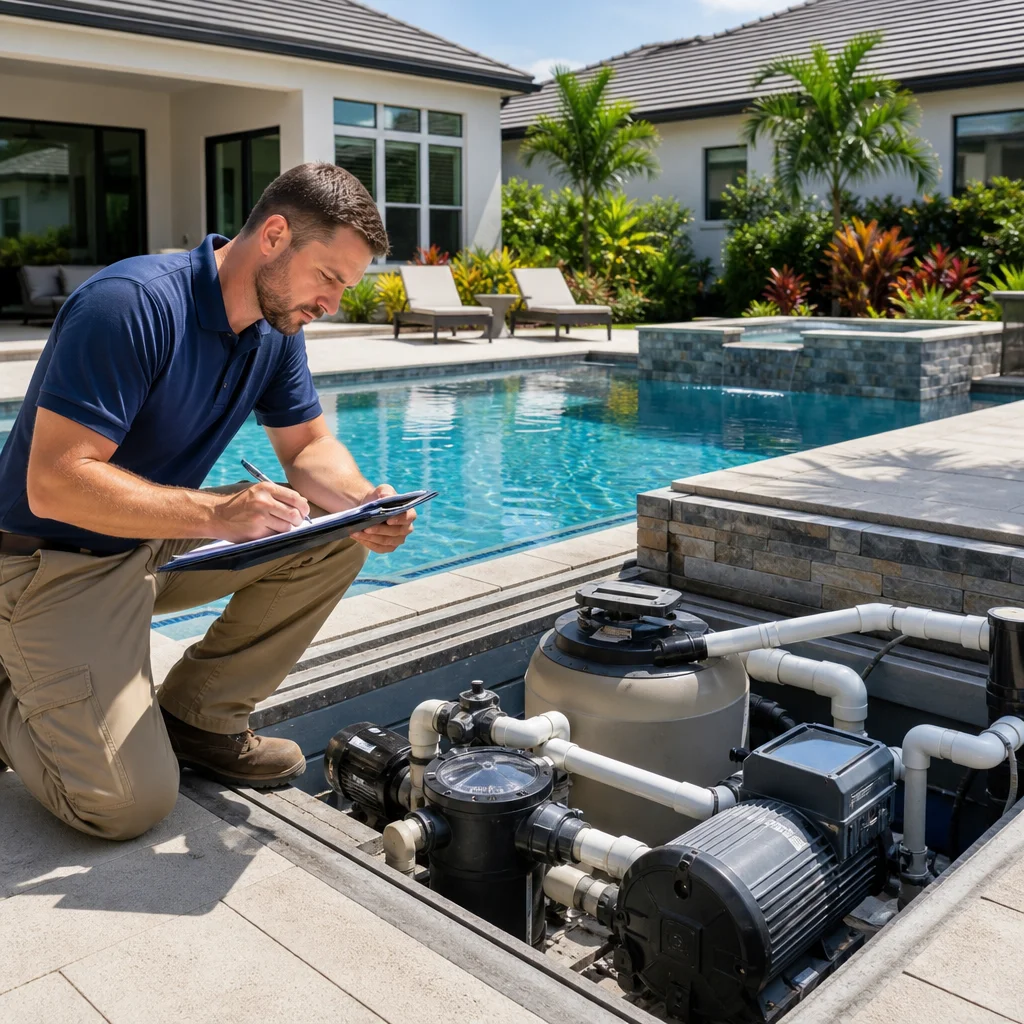
We test all equipment by running it in operation. The pump, filter, and circulation system are activated to verify they function properly. We inspect heater operation and measure temperature response. We check any automation systems or controllers to ensure they respond correctly.
Chemical testing is essential. We collect water samples and test pH, alkalinity, chlorine levels, and calcium hardness using calibrated equipment. We measure and document results so you understand whether water quality is currently acceptable.
We inspect coping, decking, and surrounding structures for damage, displacement, and safety concerns. We measure any notable cracks and photograph them for documentation.
For spas, we perform all equipment testing at operational temperature. Jet function is verified, and we check seals and shell condition carefully. We test the spa’s ability to heat and maintain temperature.
Our final step involves compiling our findings into a detailed report with photographs and clear explanations of what we discovered.
What Our Detailed Reports Include and Why They Matter
A comprehensive pool inspection report becomes your reference document for negotiations and future maintenance planning.
Our reports include high-resolution photographs of the pool, spa, equipment, deck, fencing, and any areas of concern. Visual documentation helps you recall specific issues and share them with contractors for repair estimates.
We provide detailed equipment information including model numbers, apparent age, brand, and operational status. This information is valuable when ordering replacement parts or scheduling maintenance.
Chemical test results are recorded with specific measurements and explanations. We note whether results are within acceptable ranges and flag any concerns.
Structural findings are documented with measurements and photographs. We explain the difference between minor cosmetic issues and significant structural concerns.
Code compliance observations note whether current safety features meet standards. We identify any upgrades that may be required.
Maintenance recommendations offer guidance on proper care going forward. We explain typical maintenance needs and expected equipment lifespan.
Estimated repair costs are sometimes included based on the severity of findings, though detailed contractor estimates provide more accuracy.
The goal is to provide information you can understand without technical expertise. We avoid unnecessary jargon and explain findings clearly so you can make informed decisions about your purchase.
Protecting Your Investment With Professional Assessment
Buying a home with a pool requires the same diligence you’d apply to any major system. A professional assessment protects you financially and legally.
When you have inspection results in hand, you’re positioned to negotiate. If significant repairs are needed, you can request the seller make repairs, provide a credit toward closing costs, or adjust the purchase price accordingly. Without documented findings, you have less leverage.
A professional inspection report also protects you after closing. If equipment fails or structural issues emerge shortly after purchase, documentation showing their pre-purchase condition can be valuable. You’ll know whether issues were pre-existing or developed due to your ownership.
Understanding pool condition upfront helps you budget accurately for your first year of ownership. Rather than facing unexpected repair costs, you can plan and allocate resources appropriately.
Professional inspections also identify maintenance practices that will extend equipment life and reduce costs. Knowing proper care procedures protects your investment long-term.
If you’re purchasing a home with a pool or spa, we’re here to provide the thorough assessment you need. Our team has completed thousands of inspections and brings practical experience to every evaluation. We deliver detailed reports with clear photographs and explanations so you understand exactly what you’re buying. Contact us to schedule your pool and spa inspection today, and move forward in your purchase with confidence and complete information.
For further reading: Home inspection services.
Frequently Asked Questions (FAQ)
What does your pool and spa inspection include?
We conduct a thorough assessment of all visible structural components, equipment, filtration systems, and safety features. Our inspection covers the condition of the pool shell or spa surface, pump and filter functionality, chemical system operation, and compliance with current safety standards. We also use infrared thermal imaging at no additional cost to identify potential issues that aren’t visible to the naked eye, and you’ll receive our detailed same-day report outlining any concerns we discover.
Why should we get a professional pool inspection before buying a home?
Pools and spas are expensive to repair or replace, and hidden problems can cost thousands of dollars. We’ve completed over 3,700 inspections and regularly uncover structural cracks, faulty equipment, improper drainage, and safety violations that sellers often don’t disclose. Our comprehensive assessment gives you the clarity you need to negotiate confidently, budget for repairs, or make an informed decision about whether the property is the right investment for your family.
How much can pool and spa repairs typically cost?
The price varies significantly depending on what we find during inspection. Minor equipment repairs might run a few hundred dollars, while structural damage, pump replacement, or plumbing issues can exceed several thousand. Rather than guess, we provide you with a detailed report of each finding so you and your real estate professional can research repair estimates and make decisions based on actual conditions.